Minimalist Montessori or Just Less Stuff? What Middle-Class Parents Need to Know
Scroll through #MinimalistMontessori and you'd think these parents own exactly three wooden blocks and a single hand-woven basket. Everything's beige. Everything's perfect. And every child is quietly concentrating on a $200 wooden stacking toy like they're solving cold fusion. Here's the thing: your living room probably looks nothing like that. Mine sure doesn't. We've got Duplo mixed with Cheerios under the couch and a plastic karaoke microphone that my kid is genuinely obsessed with. And guess what? That's completely fine. The real minimalist Montessori isn't about achieving some Instagram-worthy austerity. It's about cutting the noise so your kid can actually focus. Not replacing all your stuff with expensive "eco-chic" versions of the same stuff. Big difference.
Less Stuff Doesn't Mean "No Stuff"
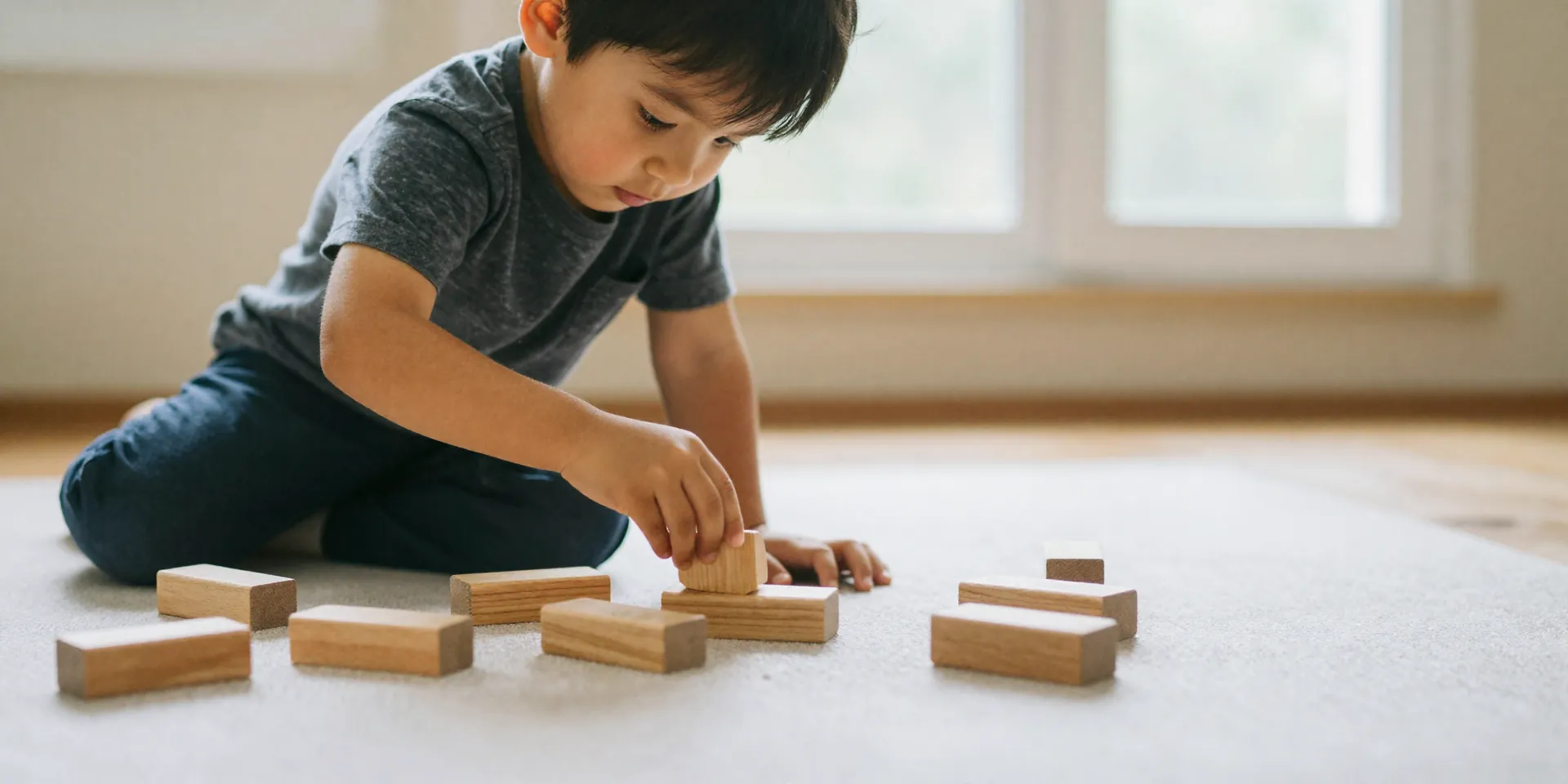
Maria Montessori never said "throw out everything your kid owns and buy these specific trays." She talked about a prepared environment. Clear space. Accessibility. That means toys at their level. A place for things. Not a void. The magic of decluttering for kids isn't the absence of objects—it's the presence of intention. When you dump fifty random toys in a giant bin, your kid gets overwhelmed. They dump it out. They wander off. They don't play. But when you rotate eight to ten things that actually work their brains? Different story. They build. They pretend. They sit still for more than four minutes. It's not because wood is morally superior to plastic. It's because fewer choices equals deeper engagement. Period.
The Middle-Class Math Problem
Let's talk money. Because the "official" Montessori market wants you to believe you need a $400 Pikler triangle and hand-carved alphabet letters from Slovenia. For middle-class families, that's nonsense. The honest truth about family budget constraints is that they force better decisions. You can't buy the curated aesthetic? Good. Your kid doesn't need it. Real Montessori basics are free or cheap. Pouring water from a pitcher into a cup. Sorting buttons by color. Using a real dustpan. Helping you chop a banana with a dull knife. These are the actual activities that build concentration, coordination, and confidence. Not the $89 sensorial puzzle. Your kitchen is already a Montessori classroom. You just haven't stopped to notice because you're stressed about not having the "right" shelf.
Decluttering Without the Guilt Trip
Guilt is the enemy here. Every parent has that pile of gifted plastic junk they feel too guilty to toss. The singing farm. The light-up robot. The thing from Aunt Linda. You don't have to Marie Kondo your entire house in one afternoon while sobbing over a broken wind-up toy. Start brutal but small. One shelf. One basket. Ask the real question: does my kid actually use this, or do they just dump it? If they dump it, it's not a toy. It's clutter. Donate it. Box it up for rotation. Stop letting toys own your space. This isn't about being a minimalist saint. It's about reclaiming your floor so your kid has room to build a fort that takes up the entire afternoon. That's the goal. Hours of focus. Not a showroom.
The Setup That Actually Works
You don't need to renovate. You need a corner. A low shelf, secondhand is perfect. A few baskets. A small table and chair where their feet touch the floor. Books with covers facing out. One activity per tray. That's it. The "prepared environment" isn't about architecture. It's about respect. Putting their world at their level tells them: your work matters. And when middle-class parents stop chasing the aesthetic and start applying the principle? That's when it clicks. Your kid doesn't care if the shelf is from IKEA or a boutique woodworker. They care that they can reach their own dang puzzle without begging you to get the bin down from the closet. Start there. The rest is just noise.